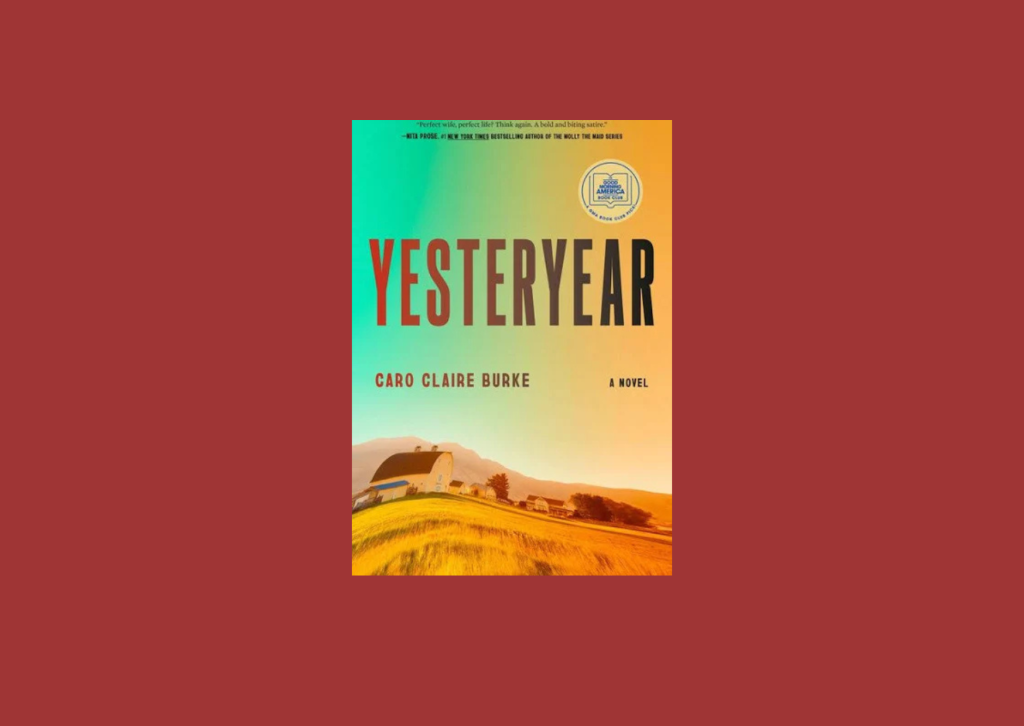
A novel on the societal and mental impact of “Tradwife” culture.
I’m going to take a stab at writing fuller, yet spoiler-free, book reviews here and there. Not every book, but maybe the ones that affected me enough that I feel it requires more than just my quarterly “quick review”. I figured I’d start with Yesteryear by Caro Claire Burke. When I heard about the theme of this story, I knew I had to read it. It’s quite different than what I usually read, but I couldn’t put it down.
The main themes of Yesteryear deal with “tradwife culture” and Christian Nationalism. When I think about “tradwife influencers,” I find it deceptive that these women promote a traditional lifestyle, being a housewife who manages the home and cares for the children, even as they are also influencers making money from it. In many respects, they have rich husbands, and these families can most likely afford the support from nannies and maids. They can afford many things the average woman can’t. The traditional wife ties in with Christian Nationalism, as this ideology encourages patriarchal structures that ultimately harm women. There’s nothing wrong with choosing to be a housewife, and nothing wrong with choosing to work. As long as we have the ability to choose. Christian Nationalism encourages the removal of that choice.
I find it hard to write about this story because I feel like almost anything I say could give too much away. I’ll start with my initial feelings when I closed the book. I felt a weird sort of fear. I was frightened for this fictional woman, and ultimately frightened for myself.
Summary
Yesteryear is about a traditional American woman, a “tradwife,” named Natalie, who lives as a mean-spirited influencer, selling the life of American family values, showing off her beautiful family, how she lives off of her land, how she takes care of her children, and her homemaker lifestyle. One day, she finds herself living in what appears to be the 1800s. She no longer recognizes her children and husband and questions how she got there. It’s the home she knows, but it’s been transported to another time.
Throughout the book, you see glimpses of her past and how she got where she is, starting with her religious and traditional upbringing with just her mother and older sister, her time at Harvard, meeting her husband, Caleb, and her life as a mother and, ultimately, a social media influencer. She manages to build up this “perfect life” on camera, but everything isn’t as it seems.
Angry Women and the Manosphere
Natalie is clearly unhappy with her life, projecting her anger onto other people. There are moments when Natalie finds herself questioning her upbringing, but falls back on the “smile and pretend” rhetoric taught by her mother and other women in her community.
She’s constantly comparing her life to her old roommate’s. She’s actually judgmental of every woman in her life, including the “angry women” who follow her on social media; jealous, feminist, corporate women who find themselves working themselves to death, not being paid enough, and trying to find a husband later in life. She has so much hatred toward other women, and when she finds herself falling apart, all she does is blame women. Not only does she blame the “angry women,” but she also blames the religious ones, stating, “Every Christian woman I ever met had been a big fat lying bastard.”
Fair enough, she has been taught to pretend and to smile even when things are shit, but she doesn’t take accountability, nor does she blame the stupid and toxic men in her life. Her politician father-in-law spews messages about an impending Civil War. Her husband follows Manosphere content, all while not quite living up to his own beliefs of traditional family values. Natalie gains thousands of followers overnight after she is mentioned on a Manosphere talk show.
“What every man needs to do his job is a wife who can do her job… Look at how hard this woman works. Look how exhausted and beautiful she is. This, my friends, is the true American Dream.”
Natalie becomes the breadwinner of their home.
Final Thoughts
The ending made me sad. Overall, Natalie is not a good person, but I found myself sympathizing with her. She creates a bubble to feel safe, only for that bubble to be the thing that ruins her life.
I had to think a little bit about why I was frightened at the end. Maybe it’s the commentary on how Christian Nationalism, right-wing politics, and manosphere rhetoric negatively impact women; rhetoric that women should always be submissive, must be the perfect-looking homemaker, shouldn’t own anything on her own, and must settle for a man who doesn’t treat her well. These things scare me because they’re real. This dark piece of fiction may feel a little outlandish, but no, there are women living through something similar, and little girls being taught right now to smile and pretend.


Leave a Reply